

The Impact of Skin Cancer Screening on the Population
Prof. Dr. Alexandru Blidișel, Prof. Dr. Olivia Toma, Assoc. Univ. Dr. Bianca Stancov
Affiliation: Victor Babeș University of Medicine and Pharmacy Timișoara, Timișoara Municipal Emergency Clinical Hospital
Why Is Skin Cancer Screening Important?
In recent years, skin cancer has become an increasingly common pathology among the Caucasian population, ranking among the leading forms of cancer associated with mortality. This situation is largely due to the lack of national screening programs and, at the same time, insufficient health education within the general population.
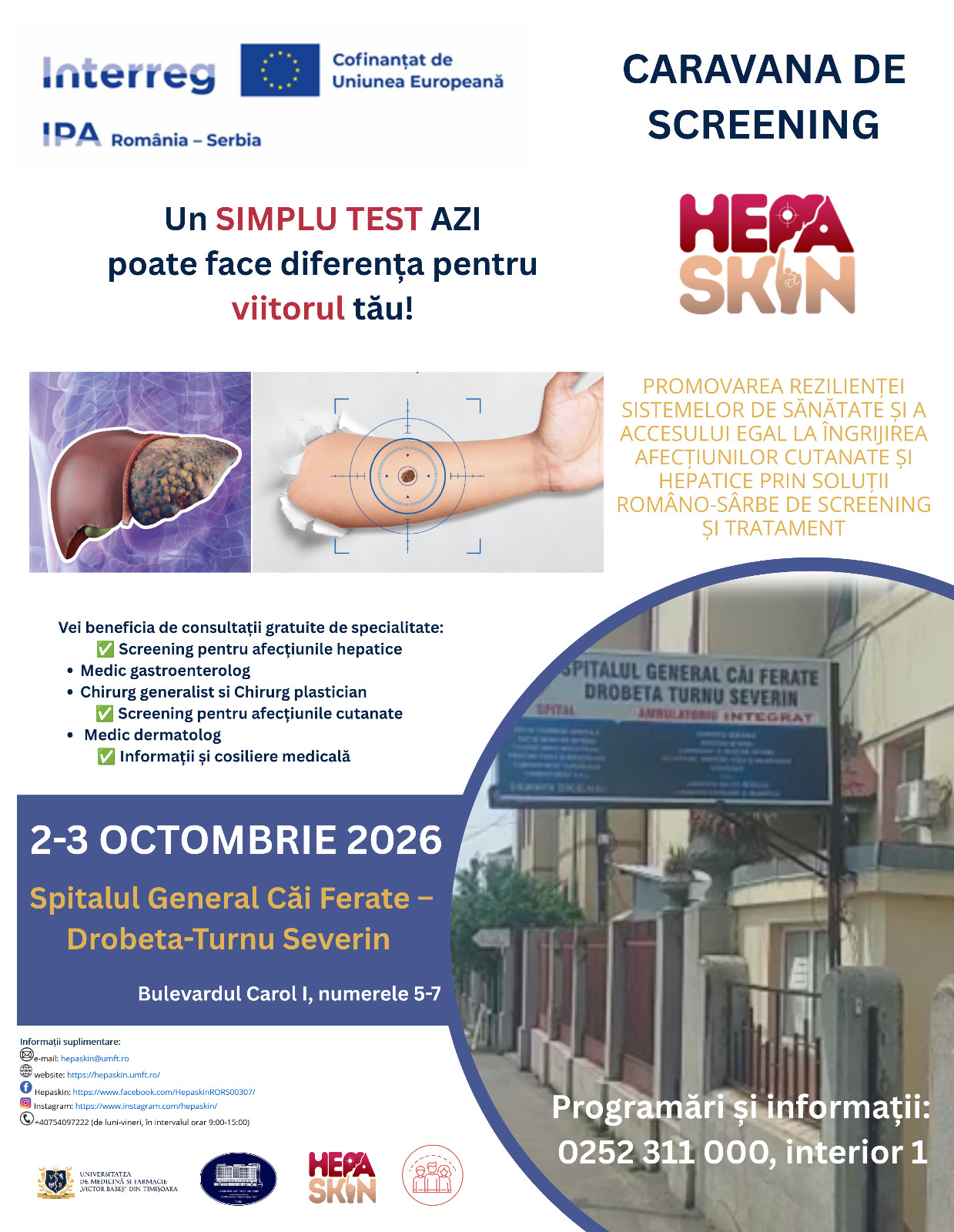
Thus, in 2024, Victor Babeș University of Medicine and Pharmacy Timișoara, in collaboration with the Timișoara Municipal Emergency Clinical Hospital, “Đorđe Jovanović” Hospital in Zrenjanin, and the “Pius Brânzeu” Training and Experimental Surgery Center in Timișoara, joined forces to implement a cross-border skin cancer screening project. This project is co-funded by the European Union through the Interreg IPA Romania–Serbia Programme.
The aim of the project is to develop a Regional Oncological Registry for the western region, in order to implement efficient diagnostic and treatment protocols. The primary objective is to reduce the number of oncological cases diagnosed at advanced stages, when therapeutic options are limited.
How Does the Screening Process Work Within the HEPASKIN Project?
Within the HEPASKIN project, 1,500 patients from both Romania and Serbia will benefit from an active skin cancer screening program. Furthermore, in cases where a form of skin cancer is positively diagnosed, patients may continue to receive treatment, following a clearly defined and structured pathway.
The HEPASKIN project includes a series of work packages for the physicians involved, offering both hands-on workshops and multiple conferences where screening methods and treatment approaches are discussed.
Over a period of 24 months, the project will be carried out in both Serbia and Romania, including screening events, workshops, and conferences for medical professionals. The ultimate goal is to develop a specialized cross-border medical team capable of providing high-quality healthcare services.
In addition, to ensure easy access to information, awareness and promotion campaigns will be organized. Patients will be able to use both the electronic platform and telephone services, not only to obtain information but also to schedule dermatological examinations.
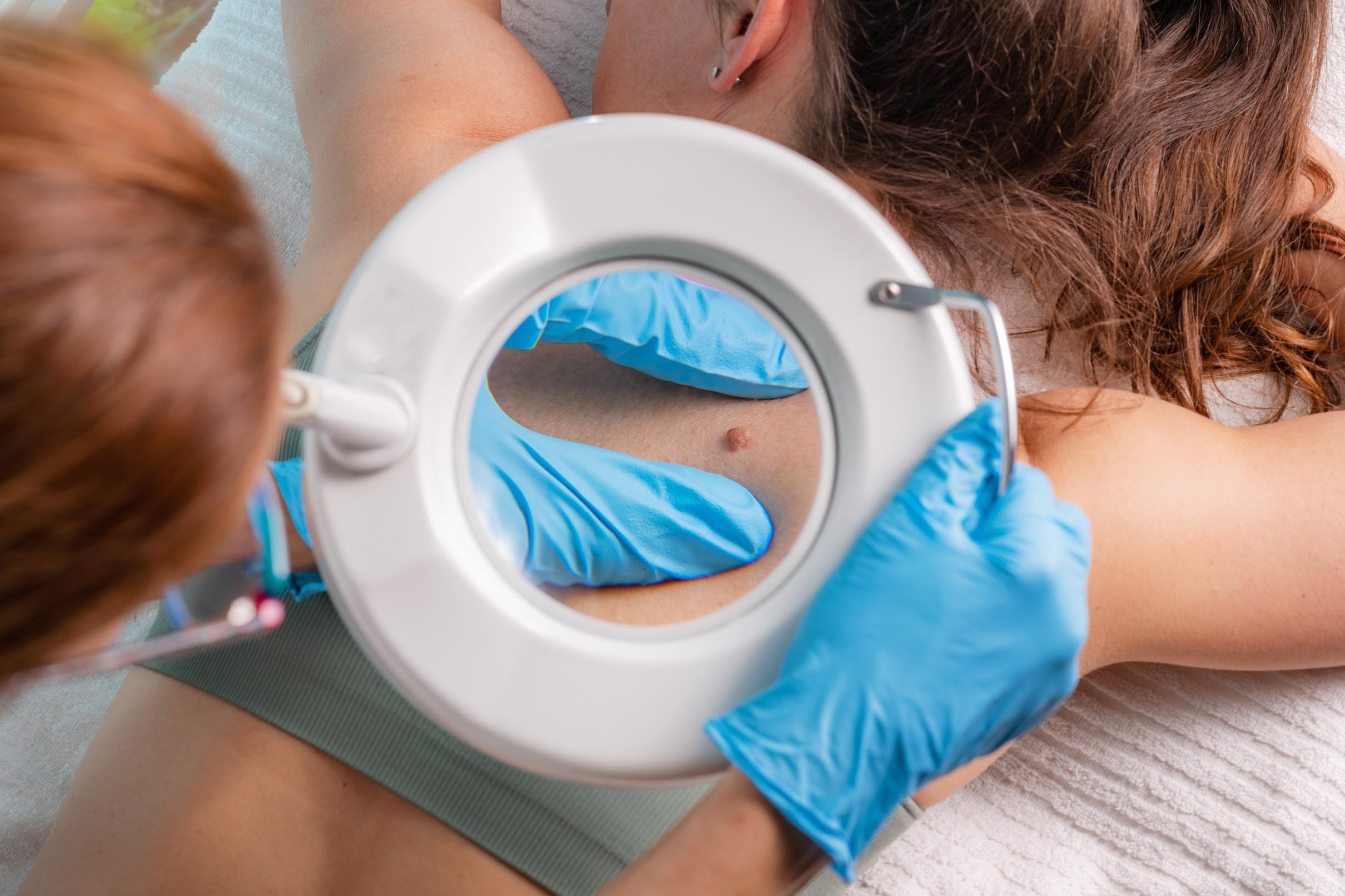
After enrolling in the project, patients will complete a questionnaire consisting of several questions. Depending on their individual risk of developing skin cancer, they will be referred to a dermatologist. Using state-of-the-art equipment (FOTO-FINDER), the dermatologist will identify any lesions with malignant potential and, when necessary, refer the patient to a surgeon for biopsy.
Following the biopsy results, the patient will undergo a new dermatological consultation. In cases of a confirmed malignant diagnosis, the patient will be evaluated by an oncological board composed of a multidisciplinary team specializing in skin cancer treatment, including an oncologist, dermatologist, and surgeon, who will determine the appropriate course of treatment.
Subsequently, for proper follow-up, depending on tumor staging, the patient will attend regular dermatological check-ups to effectively monitor disease progression or potential recurrence.
The Impact of the HEPASKIN Project on Population Health
The cross-border HEPASKIN project aims to develop and implement a skin cancer screening program across Romania and Serbia, enabling the early detection of skin cancer and offering this opportunity to 1,500 patients over the 24-month implementation period.
Additionally, the HEPASKIN project seeks to establish a Regional Oncological Registry, providing high-level treatment options and long-term monitoring for all patients diagnosed with malignant skin conditions.
Reducing the rate of late-stage skin cancer diagnosis will increase treatment opportunities, leading to better long-term outcomes, shorter treatment durations, and an overall improvement in patients’ quality of life and life expectancy.